|
|
|
|
|
Directory & Info for
Fishing,
Angling, Fishing Tackle, Fishing Guides, Fly Fishing, Bass Fishing,
Sports fishing, Game Fishing....
Info on All types of
Fishing | Angling | Fishing Tackle etc. |
| |
|
Glossary of Fish, Seafood
and Fishing Terms |
|
|
|
Australian Fish Bag Limits and Size Regulations |
|
Photos of Australian Seafood, Fish, Crustaceans &
Cephalopods and Information on each... |
|
Abalone, Blacklip |
|
Albacore
Tuna |
|
Baler Shell |
|
Barbounia, Tiny |
|
Barracouta |
|
Barramundi |
|
Bass, Sea |
|
Batfish |
|
Batfish, Silver |
|
Blackfish |
|
Boarfish |
|
Bonito Tuna |
|
Bonito, Watson's Leaping |
|
Bream |
|
Bream, Butter |
|
Bream, Slate |
|
Bug, Moreton Bay
(Slipper Lobster) |
|
Bug, Balmain |
|
Butterfish |
|
Calamari,
Southern |
|
Carp, European |
|
Catfish, Blue |
|
Catfish, Lesser Salmon |
|
Cockles |
|
Cod, Bar |
|
Cod, Blue eye |
|
Cod, Coral Rock |
|
Cod, Ghost |
|
Cod, Maori |
|
Cod, Murray
|
|
Cod, Southern Rock |
|
Cod, Spotted |
|
Cod, Tomato |
|
Cod, Wirrah |
|
Cod, Yellow Spotted |
|
Coral Trout |
|
Cowanyoung |
|
Crab, Blue Swimmer |
|
Crab, Champagne |
|
Crab, Giant
|
|
Crab, Mud |
|
Crab, Spanner |
|
Crawfish |
|
Cuttlefish |
|
Dart Fish |
|
Dolphin Fish |
|
Dory, John |
|
Dory, Mirror |
|
Dory, Silver
|
|
Drummer, Southern |
|
Eel, Longfin |
|
Emperor, Red |
|
Emperor, Red Throat |
|
Flathead |
|
Flounder, Small Toothed |
|
Flutemouth, Rough |
|
Frost Fish |
|
Garfish |
|
Gemfish |
|
Goatfish |
|
Grouper |
|
Gurnard, Red |
|
Gurnard, Spotted |
|
Hairtail |
|
Hump Headed
Maori Wrasse |
|
Hussar |
|
Jackass Fish |
|
Jacket, Ocean |
|
Jacket, Sea |
|
Jewfish |
|
Jobfish, Gold Banned |
|
Jobfish, Rosy |
|
Kingfish,
Yellowtail |
|
Latchet Fish |
|
Leatherjacket, Reef |
|
Ling |
|
Lobster Eastern
Rock |
|
Lobster Southern Rock |
|
Long Tom |
|
Luderick |
|
Mackeral, Jack |
|
Mackerel, Slimey |
|
Mado |
|
Mahi Mahi |
|
Mangrove Jack |
|
Marlin, Black |
|
Marlin, Blue |
|
Marlin, Striped |
|
Melon Shell |
|
Monkfish |
|
Mono |
|
Moon Fish |
|
Morwong |
|
Morwong, Red |
|
Mullet - Roe |
|
Mullet, Diamond Scale |
|
Mullet, Red |
|
Mullet, Sea |
|
Mullet, Yelloweye |
|
Mulloway |
|
Mussels Black |
|
Mussels Greenlip |
|
Nanygai |
|
Octopus |
|
Orange Roughy |
|
Oreo, Black |
|
Oyster,
Native |
|
Oyster,
Pacific |
|
Oyster, Sydney Rock |
|
Parrot Fish |
|
Parrot Fish (2) |
|
Perch, Ocean |
|
Perch, Saddle Tail Sea |
|
Perch, Silver |
|
Perch, Splendid |
|
Perch, Stripey Sea |
|
Pig Fish |
|
Pike |
|
Pineapple Fish |
|
Prawn, Banana |
|
Prawn, King |
|
Prawn, Red Spot |
|
Prawn, School |
|
Prawn, Tiger |
|
Queenfish, Needleskin |
|
Rainbow Runner |
|
Redclaw Crayfish |
|
Redfish |
|
Ribaldo |
|
Ribbon Fish |
|
Rudder Fish |
|
Salmon, Atlantic |
|
Salmon, Australian |
|
Scad |
|
Scallops, Queensland |
|
Scallops, Tasmanian |
|
Scorpion Fish, Raggy |
|
Shark |
|
Shark Black Tip |
|
Shark, Blue |
|
Shark Bronze Whaler (Dusky) |
|
Shark, Bull |
|
Sharks Fins |
|
Shark, Gummy |
|
Shark, Mako |
|
Shark, School |
|
Shark,
Tiger |
|
Shark,
Whiskery Reef |
|
Shark, White |
|
Shrimp, Mantis |
|
Sicklefish |
|
Silver Biddy |
|
Snapper |
|
Snapper, Big Eye |
|
Snapper, Fry Pan |
|
Snapper, Gold Band |
|
Snapper, King |
|
Snapper,
Red |
|
Snapper, Red Tropical |
|
Sole |
|
Sole, Tongue |
|
Squid, Arrow |
|
Squirrel Fish |
|
Stargazer |
|
Stingray, Butterfly |
|
Stripey Sea
Perch |
|
Surgeonfish, Sixplate Sawtail |
|
Sweetlip, Slatey |
|
Sweetlip, Yellow |
|
Swordfish |
|
Tailor |
|
Tarwhine |
|
Tilefish,
Pink |
|
Trevally, Big Eye |
|
Trevally, Golden |
|
Trevally, Silver |
|
Triple Tail |
|
Trout |
|
Trumpeter, Striped |
|
Tuna,
Albacore |
|
Tuna, Bigeye |
|
Tuna, Bluefin |
|
Tuna, Longtail |
|
Tuna, Skipjack |
|
Tuna, Striped |
|
Tuna, Mackerel |
|
Tuna, Yellowfin |
|
Venus Tusk Fish |
|
Whiting, Sand |
|
Whiting, School |
|
Wrasse |
|
Yabby,
Freshwater Crayfish |
|
Yellowtail |
|
FULL LIST of Fish &
Seafood |
|
Beche De Mer
(Sea Cucumber - Trepang) |
|
Amberfish |
|
Blackfish |
|
Black Teatfish |
|
Brown Sandfish |
|
Curryfish |
|
Elephants Trunks fish |
|
Greenfish |
|
Lollyfish |
|
Pinkfish |
|
Prickly Redfish |
|
Sandfish |
|
Stonefish |
|
Surf Redfish |
|
White Teatfish |
|
|
|
Commercial
Seafood Directory |
|
Sea-Ex Seafood, Fishing, Marine
Directory |
|
Aquaculture Directory |
|
Commercial Fishing |
|
Seafood Information by
Country |
|
Australian Fish Photos &
Info |
|
Interesting Fish Facts & Trivia |
|
Country Directories |
|
Thailand Business
Directory |
|
Seafood: |
|
Wholesale Seafood
Suppliers Australia |
|
Wholesale Seafood
Suppliers International |
|
Retail Seafood Sales |
|
Seafood Restaurants |
|
Seafood Recipes |
|
Seafood Information |
|
Seafood
Industry Resources |
|
Albacore Tuna (Thunnus alalunga) Photographs
and Information
The Albacore Tuna, Thunnus alalunga,
is a type of tuna in the family Scombridae. This species is also called albacore
fish, albacore tuna, longfin, albies, pigfish, tombo ahi, binnaga, Pacific
albacore, German bonito (but see
bonito), longfin tuna,
longfin tunny, or even just tuna. It is the only tuna species which may be
marketed as "white meat tuna" in the United States. Albacore
are pelagic fish.
|
Albacore tuna is a highly migratory finfish species that roams that
roams thee waters of the
world. It is found in the open waters of all tropical and temperate oceans, and
the Mediterranean Sea. Lengths range up to 140 cm and weights up to 45 kg. In
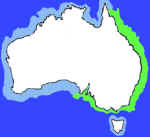
Australia albacore tuna are present in east and south Australian waters and from
east of Torres Strait to the north west shelf. The distribution of albacore is
related to oxygen concentration and water temperature. Whilst albacore feed at
the surface, they primarily live at the thermocline, which is the boundary
separating warmer surface waters and deeper, cooler waters. Mature albacore
travel from temperate waters to the tropics but return to temperate waters after
spawning.
Albacore is a prized food, and the albacore fishery is economically significant.
Methods of fishing include pole and line, long-line fishing, trolling, and some
purse seining. It is also sought after by sport fishers. "Troll-caught"
albacore are tuna between 3 and 5 years old, harvested by trolling jigs behind a
slow-moving boat. Commercial fishermen in North America have used this
low-impact, environmentally responsible fishing technique to catch albacore for
nearly a century now, while albacore fishing fleets from other countries tend to
use other fishing methods.
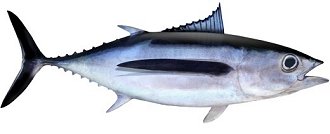
The pectoral fins of the albacore are very long, as much as 50% of the total
length. The dorsal spines are 8 to 10 in number, and well forward of the rays of
the dorsal fin. The anterior spines are much longer, giving a concave outline to
the spiny part of the dorsal fin.
An Albacore's distinct feature is it's very long pectoral fins, usually one third or
more of the fork length, and extending past the insertion of the anal fin.
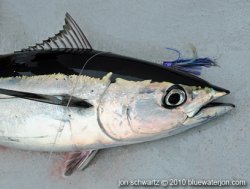
Photo Jon Schwartz
|
 |
 |
|
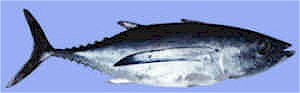
Albacore Tuna (Thunnus
alalunga)
French: Germon
German: Weisser Thun
Italian: Tonno Bianco, Alalonga
Spanish: Albacora, Atun Blanco
Japanese: Bincho; Binnaga; Tombo
Hawaii names: `Ahipalaha
|
| Scientific Name |
Thunnus alalunga |
| Location in Australia |
QLD, NSW, VIC, SA |
| Season |
All year round |
| Size |
To 15 kg |
| Australian Species Code |
37 441005 |
|
Nutritional
Information
For every 100 grams raw product
for Albacore Tuna fillet. |
|
Kilojoules |
521 (124
calories) |
|
Cholesterol |
30 mg |
|
Sodium |
37 g |
|
Total fat
(oil) |
0.5 g |
|
Saturated
fat |
33% of total
fat |
|
Monounsaturated fat |
13% of total
fat |
|
Polyunsaturated fat |
54% of total
fat |
|
Omega-3, EPA |
14 mg |
|
Omega-3, DHA |
100 mg |
|
Omega-6, AA |
15 mg |
|
|
Angling for Albacore | Tuna
Fishing:
It is a prized sporting fish which will take small lures and also live
bait.
Albacore are
generally caught in waters off New South Wales from September to
December and in April and May. Anglers often use trolling
methods with artificial lures and live or dead baits to catch
albacore
|
|
Cooking
Albacore Tuna:
Albacore Tuna is the only tuna that can
be canned under the "white meat" label. It is the most
expensive tuna to buy. Albacore tuna meat is very delicate, and
it is best cooked quickly to avoid overcooking.
|
|
Commercial Fishing for Albacore Tuna: Consumers are increasingly
concerned about the sustainability of fisheries. A number
of programs have been developed to help consumers identify and
support responsible and sustainable fisheries. Perhaps the most
widely accepted of these programs is that of the Marine
Stewardship Council (MSC).
|
|