|
|
|
|
|
Directory & Info for
Fishing,
Angling, Fishing Tackle, Fishing Guides, Fly Fishing, Bass Fishing,
Sports fishing, Game Fishing....
Info on All types of
Fishing | Angling | Fishing Tackle etc. |
| |
|
Glossary of Fish, Seafood
and Fishing Terms |
|
|
|
Australian Fish Bag Limits and Size Regulations |
|
Photos of Australian Seafood, Fish, Crustaceans &
Cephalopods and Information on each... |
|
Abalone, Blacklip |
|
Albacore
Tuna |
|
Baler Shell |
|
Barbounia, Tiny |
|
Barracouta |
|
Barramundi |
|
Bass, Sea |
|
Batfish |
|
Batfish, Silver |
|
Blackfish |
|
Boarfish |
|
Bonito Tuna |
|
Bonito, Watson's Leaping |
|
Bream |
|
Bream, Butter |
|
Bream, Slate |
|
Bug, Moreton Bay
(Slipper Lobster) |
|
Bug, Balmain |
|
Butterfish |
|
Calamari,
Southern |
|
Carp, European |
|
Catfish, Blue |
|
Catfish, Lesser Salmon |
|
Cockles |
|
Cod, Bar |
|
Cod, Blue eye |
|
Cod, Coral Rock |
|
Cod, Ghost |
|
Cod, Maori |
|
Cod, Murray
|
|
Cod, Southern Rock |
|
Cod, Spotted |
|
Cod, Tomato |
|
Cod, Wirrah |
|
Cod, Yellow Spotted |
|
Coral Trout |
|
Cowanyoung |
|
Crab, Blue Swimmer |
|
Crab, Champagne |
|
Crab, Giant
|
|
Crab, Mud |
|
Crab, Spanner |
|
Crawfish |
|
Cuttlefish |
|
Dart Fish |
|
Dolphin Fish |
|
Dory, John |
|
Dory, Mirror |
|
Dory, Silver
|
|
Drummer, Southern |
|
Eel, Longfin |
|
Emperor, Red |
|
Emperor, Red Throat |
|
Flathead |
|
Flounder, Small Toothed |
|
Flutemouth, Rough |
|
Frost Fish |
|
Garfish |
|
Gemfish |
|
Goatfish |
|
Grouper |
|
Gurnard, Red |
|
Gurnard, Spotted |
|
Hairtail |
|
Hump Headed
Maori Wrasse |
|
Hussar |
|
Jackass Fish |
|
Jacket, Ocean |
|
Jacket, Sea |
|
Jewfish |
|
Jobfish, Gold Banned |
|
Jobfish, Rosy |
|
Kingfish,
Yellowtail |
|
Latchet Fish |
|
Leatherjacket, Reef |
|
Ling |
|
Lobster Eastern
Rock |
|
Lobster Southern Rock |
|
Long Tom |
|
Luderick |
|
Mackeral, Jack |
|
Mackerel, Slimey |
|
Mado |
|
Mahi Mahi |
|
Mangrove Jack |
|
Marlin, Black |
|
Marlin, Blue |
|
Marlin, Striped |
|
Melon Shell |
|
Monkfish |
|
Mono |
|
Moon Fish |
|
Morwong |
|
Morwong, Red |
|
Mullet - Roe |
|
Mullet, Diamond Scale |
|
Mullet, Red |
|
Mullet, Sea |
|
Mullet, Yelloweye |
|
Mulloway |
|
Mussels Black |
|
Mussels Greenlip |
|
Nanygai |
|
Octopus |
|
Orange Roughy |
|
Oreo, Black |
|
Oyster,
Native |
|
Oyster,
Pacific |
|
Oyster, Sydney Rock |
|
Parrot Fish |
|
Parrot Fish (2) |
|
Perch, Ocean |
|
Perch, Saddle Tail Sea |
|
Perch, Silver |
|
Perch, Splendid |
|
Perch, Stripey Sea |
|
Pig Fish |
|
Pike |
|
Pineapple Fish |
|
Prawn, Banana |
|
Prawn, King |
|
Prawn, Red Spot |
|
Prawn, School |
|
Prawn, Tiger |
|
Queenfish, Needleskin |
|
Rainbow Runner |
|
Redclaw Crayfish |
|
Redfish |
|
Ribaldo |
|
Ribbon Fish |
|
Rudder Fish |
|
Salmon, Atlantic |
|
Salmon, Australian |
|
Scad |
|
Scallops, Queensland |
|
Scallops, Tasmanian |
|
Scorpion Fish, Raggy |
|
Shark |
|
Shark Black Tip |
|
Shark, Blue |
|
Shark Bronze Whaler (Dusky) |
|
Shark, Bull |
|
Sharks Fins |
|
Shark, Gummy |
|
Shark, Mako |
|
Shark, School |
|
Shark,
Tiger |
|
Shark,
Whiskery Reef |
|
Shark, White |
|
Shrimp, Mantis |
|
Sicklefish |
|
Silver Biddy |
|
Snapper |
|
Snapper, Big Eye |
|
Snapper, Fry Pan |
|
Snapper, Gold Band |
|
Snapper, King |
|
Snapper,
Red |
|
Snapper, Red Tropical |
|
Sole |
|
Sole, Tongue |
|
Squid, Arrow |
|
Squirrel Fish |
|
Stargazer |
|
Stingray, Butterfly |
|
Stripey Sea
Perch |
|
Surgeonfish, Sixplate Sawtail |
|
Sweetlip, Slatey |
|
Sweetlip, Yellow |
|
Swordfish |
|
Tailor |
|
Tarwhine |
|
Tilefish,
Pink |
|
Trevally, Big Eye |
|
Trevally, Golden |
|
Trevally, Silver |
|
Triple Tail |
|
Trout |
|
Trumpeter, Striped |
|
Tuna,
Albacore |
|
Tuna, Bigeye |
|
Tuna, Bluefin |
|
Tuna, Longtail |
|
Tuna, Skipjack |
|
Tuna, Striped |
|
Tuna, Mackerel |
|
Tuna, Yellowfin |
|
Venus Tusk Fish |
|
Whiting, Sand |
|
Whiting, School |
|
Wrasse |
|
Yabby,
Freshwater Crayfish |
|
Yellowtail |
|
FULL LIST of Fish &
Seafood |
|
Beche De Mer
(Sea Cucumber - Trepang) |
|
Amberfish |
|
Blackfish |
|
Black Teatfish |
|
Brown Sandfish |
|
Curryfish |
|
Elephants Trunks fish |
|
Greenfish |
|
Lollyfish |
|
Pinkfish |
|
Prickly Redfish |
|
Sandfish |
|
Stonefish |
|
Surf Redfish |
|
White Teatfish |
|
|
|
Commercial
Seafood Directory |
|
Sea-Ex Seafood, Fishing, Marine
Directory |
|
Aquaculture Directory |
|
Commercial Fishing |
|
Seafood Information by
Country |
|
Australian Fish Photos &
Info |
|
Interesting Fish Facts & Trivia |
|
Country Directories |
|
Thailand Business
Directory |
|
Seafood: |
|
Wholesale Seafood
Suppliers Australia |
|
Wholesale Seafood
Suppliers International |
|
Retail Seafood Sales |
|
Seafood Restaurants |
|
Seafood Recipes |
|
Seafood Information |
|
Seafood
Industry Resources |
|
Barracouta (Thyrsites atun) Photographs
and Information
Barracouta
take lures avidly even spectacularly at times when they are feeding at
the surface. They even provide strikes on poppers. On top of the lure
action the fish will take just about any bait and feeds anywhere from
the surface to the bottom.
Barracouta are also
known as 'couta and
snoek (South Africa) and Sierra (South American waters)
The barracouta is
frequently referred to as 'couta. It also has several other
colloquial titles, including "pick-handle", "axe-handle" and
"hammer-handle", all of which refer to its shape. In some areas
its South African name of "snoek" or "snook" is also used.
|
Barracouta are an excellent sporting fish which will have
a go at anything that sparkles and will jump clear of the water chasing lures
which are trolled behind boats.
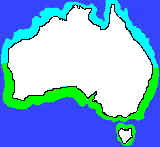
It is abundant in the southern hemisphere,
ranging widely from southern Australia, both islands of New Zealand (where is is
particularly plentiful) south of Cook Strait, South Africa, Argentina and Chile.
It is related to the great mackerel family
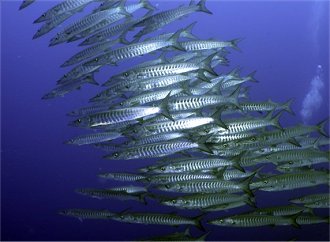
and its allies. It is an important commercial fish. The Barracouta
is a pelagic fish, traveling in schools and has been known to grow to a length
of 1.5 metres, although an average size is around 1 metre and weighing 2.5kg.
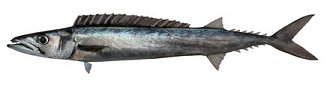
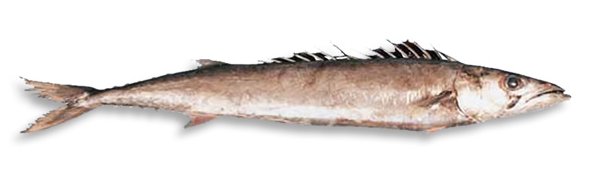
It has an elongated, compressed body which is covered with minute, easily
dislodged scales.
This slim, needle-toothed
fish is usually dark, steely-blue or green along the top of the
back and bright, metallic silver on the flanks and belly. There
is a distinct black patch near the leading edge of the long,
relatively high first dorsal fin. The forked tail is dark, often
black. Barracouta are sometimes confused with the tropical
barracuda. However, beyond vague similarities in body shape and
teeth, the two have little in common and are unrelated.
Although often caught at lengths between 50 and 140 cm,
barracouta are very lightly built. Even exceptional specimens in
excess of 150 cm rarely weigh more than 4 or 5 kg. A more
typical barracouta measures under a metre in length and weighs
between 0.8 and 1.5 kg.
Barracouta eggs are small, transparent and
pelagic. Fry inhabit sheltered waters of bays and estuaries and grow very
quickly, reaching 30cm by the end of the first year.
Although they are a pelagic fish, they can
be found in schools at all depths down to forty fathoms. They feed and
travel very close to the coast. They will feed on small baitfish such as
anchovies and pilchards, jack mackerel and krill. They are active, savage
hunters and are driven on by a voracious appetite.
|
 |
 |
DID YOU KNOW?
The Barracouta have 3 large vicious teeth under it's
upper front lip, followed by rows of very sharp, flat cutting teeth in each jaw.
DID
YOU KNOW?
In the early part of the twentieth century, the fishing industry in Australia
began to target additional species and use of new fishing methods. Until
mid-century,
sea
mullet was the most common commercial fishery, followed by barracouta.
|
| Scientific Name |
Thyrsites atun |
| Location |
Southern half of Australia |
| Season |
All year round. |
| Size |
To 1.5 metres and up to 6kg |
| Australian
Species Code |
37 439001 |
| Taste, Texture |
- |
.
|
Nutritional
Information
For every 100 grams raw product
for Barracouta fillet. |
|
Kilojoules |
- |
|
Cholesterol |
- |
|
Sodium |
- |
|
Total fat
(oil) |
- |
|
Saturated
fat |
- |
|
Monounsaturated fat |
- |
|
Polyunsaturated fat |
- |
|
Omega-3, EPA |
- |
|
Omega-3, DHA |
- |
|
Omega-6, AA |
- |
|
See Also:
Snoek
|
Angling for
Barracouta :
Barracouta take lures avidly even
spectacularly at times when the 'couta are feeding at the surface. They even
provide strikes on poppers if you like to get your jollies with visible takes.
On top of the lure action the fish will take just about any bait and feeds
anywhere from the surface to the bottom.
Barracouta often form very large schools
and appear to 'invade' an area making it impossible to catch anything else. When
this situation occurs, anglers often get frustrated and hurl abuse at the
'couta. The best thing to do in this situation is maximise the opportunities
available and enjoy the fishing. The school behaviour of these fish can be quite
irrational as they chase anything that moves. The fish will even leap at a lure
suspended above the water.
|
Cooking
Barracouta:
Although generally despised in New South Wales, barracouta
actually have tasty, pinkish-coloured flesh which is firm and
white when cooked, and is also ideally suited to smoking. After
cooking, the many long, flexible bones are easily removed. The
flesh of barracouta can occasionally be infested with parasitic
worms. Cooking destroys these worms and they appear to have no
effect on the eating quality of the fish. However, barracouta
should never be eaten raw.
|
|
Commercial Fishing for Barracouta:
The Couta Boat:
A couta boat is a type of boat sailed in Victoria,
Australia, around Sorrento and Queenscliff and along Victoria's
west coast as far west as Portland. It was originally used for
fishing around the coast there from around 1870 until the 1930s,
although it survived as a commercial fishing vessel until the
1950s.
The couta boat developed for the coastal fishing industry over
the later part of 19th century. Fishermen chased such
sought-after fish as barracouta (hence the name “couta boat”,
scientific name "Thyrsites atun") but fishing co-operatives
established quotas to control prices, and it was this that led
to the added requirement of speed in a good fishing boat.
More resources about
Barracouta & Barracouta Information |
|