|
|
|
|
|
Directory & Info for
Fishing,
Angling, Fishing Tackle, Fishing Guides, Fly Fishing, Bass Fishing,
Sports fishing, Game Fishing....
Info on All types of
Fishing | Angling | Fishing Tackle etc. |
| |
|
Glossary of Fish, Seafood
and Fishing Terms |
|
|
|
Australian Fish Bag Limits and Size Regulations |
|
Photos of Australian Seafood, Fish, Crustaceans &
Cephalopods and Information on each... |
|
Abalone, Blacklip |
|
Albacore
Tuna |
|
Baler Shell |
|
Barbounia, Tiny |
|
Barracouta |
|
Barramundi |
|
Bass, Sea |
|
Batfish |
|
Batfish, Silver |
|
Blackfish |
|
Boarfish |
|
Bonito Tuna |
|
Bonito, Watson's Leaping |
|
Bream |
|
Bream, Butter |
|
Bream, Slate |
|
Bug, Moreton Bay
(Slipper Lobster) |
|
Bug, Balmain |
|
Butterfish |
|
Calamari,
Southern |
|
Carp, European |
|
Catfish, Blue |
|
Catfish, Lesser Salmon |
|
Cockles |
|
Cod, Bar |
|
Cod, Blue eye |
|
Cod, Coral Rock |
|
Cod, Ghost |
|
Cod, Maori |
|
Cod, Murray
|
|
Cod, Southern Rock |
|
Cod, Spotted |
|
Cod, Tomato |
|
Cod, Wirrah |
|
Cod, Yellow Spotted |
|
Coral Trout |
|
Cowanyoung |
|
Crab, Blue Swimmer |
|
Crab, Champagne |
|
Crab, Giant
|
|
Crab, Mud |
|
Crab, Spanner |
|
Crawfish |
|
Cuttlefish |
|
Dart Fish |
|
Dolphin Fish |
|
Dory, John |
|
Dory, Mirror |
|
Dory, Silver
|
|
Drummer, Southern |
|
Eel, Longfin |
|
Emperor, Red |
|
Emperor, Red Throat |
|
Flathead |
|
Flounder, Small Toothed |
|
Flutemouth, Rough |
|
Frost Fish |
|
Garfish |
|
Gemfish |
|
Goatfish |
|
Grouper |
|
Gurnard, Red |
|
Gurnard, Spotted |
|
Hairtail |
|
Hump Headed
Maori Wrasse |
|
Hussar |
|
Jackass Fish |
|
Jacket, Ocean |
|
Jacket, Sea |
|
Jewfish |
|
Jobfish, Gold Banned |
|
Jobfish, Rosy |
|
Kingfish,
Yellowtail |
|
Latchet Fish |
|
Leatherjacket, Reef |
|
Ling |
|
Lobster Eastern
Rock |
|
Lobster Southern Rock |
|
Long Tom |
|
Luderick |
|
Mackeral, Jack |
|
Mackerel, Slimey |
|
Mado |
|
Mahi Mahi |
|
Mangrove Jack |
|
Marlin, Black |
|
Marlin, Blue |
|
Marlin, Striped |
|
Melon Shell |
|
Monkfish |
|
Mono |
|
Moon Fish |
|
Morwong |
|
Morwong, Red |
|
Mullet - Roe |
|
Mullet, Diamond Scale |
|
Mullet, Red |
|
Mullet, Sea |
|
Mullet, Yelloweye |
|
Mulloway |
|
Mussels Black |
|
Mussels Greenlip |
|
Nanygai |
|
Octopus |
|
Orange Roughy |
|
Oreo, Black |
|
Oyster,
Native |
|
Oyster,
Pacific |
|
Oyster, Sydney Rock |
|
Parrot Fish |
|
Parrot Fish (2) |
|
Perch, Ocean |
|
Perch, Saddle Tail Sea |
|
Perch, Silver |
|
Perch, Splendid |
|
Perch, Stripey Sea |
|
Pig Fish |
|
Pike |
|
Pineapple Fish |
|
Prawn, Banana |
|
Prawn, King |
|
Prawn, Red Spot |
|
Prawn, School |
|
Prawn, Tiger |
|
Queenfish, Needleskin |
|
Rainbow Runner |
|
Redclaw Crayfish |
|
Redfish |
|
Ribaldo |
|
Ribbon Fish |
|
Rudder Fish |
|
Salmon, Atlantic |
|
Salmon, Australian |
|
Scad |
|
Scallops, Queensland |
|
Scallops, Tasmanian |
|
Scorpion Fish, Raggy |
|
Shark |
|
Shark Black Tip |
|
Shark, Blue |
|
Shark Bronze Whaler (Dusky) |
|
Shark, Bull |
|
Sharks Fins |
|
Shark, Gummy |
|
Shark, Mako |
|
Shark, School |
|
Shark,
Tiger |
|
Shark,
Whiskery Reef |
|
Shark, White |
|
Shrimp, Mantis |
|
Sicklefish |
|
Silver Biddy |
|
Snapper |
|
Snapper, Big Eye |
|
Snapper, Fry Pan |
|
Snapper, Gold Band |
|
Snapper, King |
|
Snapper,
Red |
|
Snapper, Red Tropical |
|
Sole |
|
Sole, Tongue |
|
Squid, Arrow |
|
Squirrel Fish |
|
Stargazer |
|
Stingray, Butterfly |
|
Stripey Sea
Perch |
|
Surgeonfish, Sixplate Sawtail |
|
Sweetlip, Slatey |
|
Sweetlip, Yellow |
|
Swordfish |
|
Tailor |
|
Tarwhine |
|
Tilefish,
Pink |
|
Trevally, Big Eye |
|
Trevally, Golden |
|
Trevally, Silver |
|
Triple Tail |
|
Trout |
|
Trumpeter, Striped |
|
Tuna,
Albacore |
|
Tuna, Bigeye |
|
Tuna, Bluefin |
|
Tuna, Longtail |
|
Tuna, Skipjack |
|
Tuna, Striped |
|
Tuna, Mackerel |
|
Tuna, Yellowfin |
|
Venus Tusk Fish |
|
Whiting, Sand |
|
Whiting, School |
|
Wrasse |
|
Yabby,
Freshwater Crayfish |
|
Yellowtail |
|
FULL LIST of Fish &
Seafood |
|
Beche De Mer
(Sea Cucumber - Trepang) |
|
Amberfish |
|
Blackfish |
|
Black Teatfish |
|
Brown Sandfish |
|
Curryfish |
|
Elephants Trunks fish |
|
Greenfish |
|
Lollyfish |
|
Pinkfish |
|
Prickly Redfish |
|
Sandfish |
|
Stonefish |
|
Surf Redfish |
|
White Teatfish |
|
|
|
Commercial
Seafood Directory |
|
Sea-Ex Seafood, Fishing, Marine
Directory |
|
Aquaculture Directory |
|
Commercial Fishing |
|
Seafood Information by
Country |
|
Australian Fish Photos &
Info |
|
Interesting Fish Facts & Trivia |
|
Country Directories |
|
Thailand Business
Directory |
|
Seafood: |
|
Wholesale Seafood
Suppliers Australia |
|
Wholesale Seafood
Suppliers International |
|
Retail Seafood Sales |
|
Seafood Restaurants |
|
Seafood Recipes |
|
Seafood Information |
|
Seafood
Industry Resources |
|
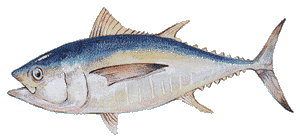
Bigeye Tuna (Thunnus obesus) Photographs
and Information
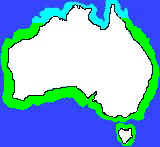
Bigeye tuna are found in tropical and subtropical waters of the Pacific, Indian and
Atlantic oceans. They are an oceanic fish, found throughout Australian waters when
surface temperatures exceed 17ºC. Although juvenile bigeye tuna have not been
reported outside tropical waters. Bigeye tuna
smaller than 20kg are mainly found with surface-dwelling schools of similar
fish such as yellowfin tuna
and skipjack tuna. Schools
of only bigeye tuna are less common. Adults tend to be solitary.
|
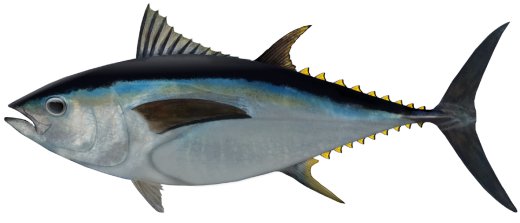
Bigeye Tuna or Big Eye
Tuna have a shallow notch at the centre of the caudal fin fork and, in adults,
the eye is relatively large compared with that of other tunas. Their entire dorsal
and ventral body profiles are evenly curved. The liver has noticeable striations and
its central lobe is the longest. The pectoral fin in adult bigeye tuna is
one-quarter to one-third the body fork length, whereas the pectoral fin in juvenile bigeye
tuna is longer and always extends beyond a line drawn between the anterior edges of the
second dorsal and anal fins. Bigeye tuna less than 75cm fork length (10kg whole
weight) have longer pectoral fins than Yellowfin Tuna of comparable
sizes. Juvenile bigeye tuna often have 7-10 white unbroken stripes crossing the
lower sides vertically, substantially fewer than in juvenile yellowfin tuna.
Bigeye tuna are found in tropical and subtropical waters of the Pacific, Indian and
Atlantic oceans. They are an oceanic fish, found throughout Australian waters when
surface temperatures exceed 17ºC. Although juvenile bigeye tuna have not been
reported outside tropical waters.
Bigeye tuna smaller than 20kg are mainly found with surface-dwelling schools of similar
fish such as yellowfin tuna
and skipjack tuna. Schools
of only bigeye tuna are less common. Adults tend to be solitary.
Interesting Facts about Bigeye
Tuna:
Bigeye tuna can dive deeper than
other tuna species and exhibit extensive vertical movements.
This species exhibits clear daily patterns, moving to deeper
waters during the daytime
Bigeye tuna is caught mostly in
tropical waters.
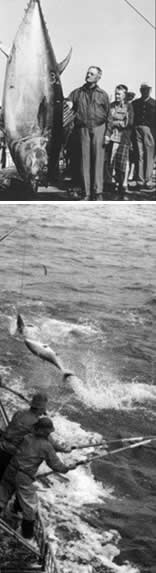
In the Atlantic Ocean, the record for the
largest bigeye tuna caught recreationally is a 375 pound
fish with a fork length of 6.75 feet taken off Ocean City,
Maryland in 1977.
Bigeye tuna are believed to have
recently evolved from a common parent stock of
yellowfin tuna.
The main predators of bigeye tuna are
large billfish and toothed whales.
|
 |
 |
Bigeye Tuna (Thunnus obesus)
French: Thon Obese
German: Grossaugenthun
Italian: Tonno Obeso
Spanish: Patudo
Japanese: Mebachi
Hawaii names: `Ahi po`o nui; `Ahi
|
| Scientific Name |
Thunnus obesus |
| Location |
QLD, NSW, VIC, Tas, SA, WA |
| Season |
All year round |
| Size |
|
| Australian Species Code |
37 441011 |
| Taste, Texture |
Medium flavour. Medium to Firm texture. |
.
|
Nutritional
Information
For every 100 grams raw product
for Bigeye Tuna fillet. |
|
Kilojoules |
521 (124
calories) |
|
Cholesterol |
30 mg |
|
Sodium |
37 g |
|
Total fat
(oil) |
0.5 g |
|
Saturated
fat |
33% of total
fat |
|
Monounsaturated fat |
13% of total
fat |
|
Polyunsaturated fat |
54% of total
fat |
|
Omega-3, EPA |
14 mg |
|
Omega-3, DHA |
100 mg |
|
Omega-6, AA |
15 mg |
|
Other
Bluefin Tuna Links:
TUNA
RECIPES
Exporters of Bluefin Tuna
Importers of Bluefin Tuna
Processors of Bluefin Tuna
Wholesale Suppliers of Bluefin Tuna
Seafood Agents for Bluefin Tuna
Canned Tuna Buyers & Suppliers
|
Big Eye Tuna Facts:
Geographic range: Bigeye tuna is found in the
Atlantic, Pacific, and Indian oceans in warmer temperature waters between 55 and
84º F. In the western Atlantic, they can be found from Nova Scotia to Argentina,
including the Caribbean and the Gulf of Mexico.
Habitat: Bigeye tuna are a pelagic species - they
are found from the surface to about 800 feet deep. Larvae are found in tropical
waters, but as juvenile fish grow larger, they tend to move into temperate
waters.
Life span: Bigeye tuna can live longer than 9
years.
Food: Bigeye tuna feed at night and during the day
on fishes, squid, and crustaceans found from the surface to a depth of 500 feet.
They favor shrimp, mackerel, and other small tuna.
Growth rate: Relatively fast.
Maximum size: Bigeye typically range in length from
1.5 to 5.5 feet. Bigeye over 6.5 feet are rare.
Reaches reproductive maturity: At about age three and a half.
|
Angling for Big Eye Tuna:
Bigeye Tuna are a highly sought after game
fish.
Bigeye tuna are believed to have recently evolved
from a common parent stock of yellowfin tuna.
One of the most difficult fish identification jobs is
distinguishing between a Bigeye Tuna (Thunnus obesus) and a Yellowfin Tuna (Thunnus
albacares).
There are two methods of examining these fish, exterior and interior. Only the
interior examination is 100 percent foolproof. The smaller the size of the tuna,
the less effective the exterior examination becomes. The easiest method is to
look for first for the characteristics of the Bigeye Tuna first, and by the
process of elimination, wind up by concluding you are holding a Yellowfin Tuna.
|
|
Cooking
Bigeye Tuna & Tuna Recipes:
Tuna
is low in saturated fat and sodium and is a very good
source of protein, thiamin, selenium, and vitamin B6. Bigeye
Tuna has a pale pink flesh, medium to firm texture and a
medium to high fat content.
|
|
Commercial Fishing for Bigeye Tuna: Bigeye tuna are caught by pole and line
and purse seine fisheries in the western and central Pacific
Ocean, and in Australia's Eastern Tuna and Billfish Fishery.
Tagging studies help scientists account for fluctuations in
fishery catch records in order to better estimate fish stocks.
Spikes in catches can be due to shifts in fish diving behaviour
and their availability to fishing gear, rather than rises or
falls in overall numbers. For example, when bigeye dive deeper
on the full moon their habitat range overlaps with night-time
sets of fishing gear resulting in higher catches.
|
|
More links &
resources about
Big Eye Tuna and Tuna Information:
FishWatch US Seafood Facts about Atlantic Bigeye Tuna, Marine
Stewardship Council fishery certification program and seafood ecolabel. CSIRO
scientist Karen Evans has tagged tunas, billfish, sharks, seabirds, seals and
whales from the tropics to Antarctica. Karen led the data analysis and reporting
of a project that tagged 161 bigeye tuna......
|
|