|
|
|
|
|
Directory & Info for
Fishing,
Angling, Fishing Tackle, Fishing Guides, Fly Fishing, Bass Fishing,
Sports fishing, Game Fishing....
Info on All types of
Fishing | Angling | Fishing Tackle etc. |
| |
|
Glossary of Fish, Seafood
and Fishing Terms |
|
|
|
Australian Fish Bag Limits and Size Regulations |
|
Photos of Australian Seafood, Fish, Crustaceans &
Cephalopods and Information on each... |
|
Abalone, Blacklip |
|
Albacore
Tuna |
|
Baler Shell |
|
Barbounia, Tiny |
|
Barracouta |
|
Barramundi |
|
Bass, Sea |
|
Batfish |
|
Batfish, Silver |
|
Blackfish |
|
Boarfish |
|
Bonito Tuna |
|
Bonito, Watson's Leaping |
|
Bream |
|
Bream, Butter |
|
Bream, Slate |
|
Bug, Moreton Bay
(Slipper Lobster) |
|
Bug, Balmain |
|
Butterfish |
|
Calamari,
Southern |
|
Carp, European |
|
Catfish, Blue |
|
Catfish, Lesser Salmon |
|
Cockles |
|
Cod, Bar |
|
Cod, Blue eye |
|
Cod, Coral Rock |
|
Cod, Ghost |
|
Cod, Maori |
|
Cod, Murray
|
|
Cod, Southern Rock |
|
Cod, Spotted |
|
Cod, Tomato |
|
Cod, Wirrah |
|
Cod, Yellow Spotted |
|
Coral Trout |
|
Cowanyoung |
|
Crab, Blue Swimmer |
|
Crab, Champagne |
|
Crab, Giant
|
|
Crab, Mud |
|
Crab, Spanner |
|
Crawfish |
|
Cuttlefish |
|
Dart Fish |
|
Dolphin Fish |
|
Dory, John |
|
Dory, Mirror |
|
Dory, Silver
|
|
Drummer, Southern |
|
Eel, Longfin |
|
Emperor, Red |
|
Emperor, Red Throat |
|
Flathead |
|
Flounder, Small Toothed |
|
Flutemouth, Rough |
|
Frost Fish |
|
Garfish |
|
Gemfish |
|
Goatfish |
|
Grouper |
|
Gurnard, Red |
|
Gurnard, Spotted |
|
Hairtail |
|
Hump Headed
Maori Wrasse |
|
Hussar |
|
Jackass Fish |
|
Jacket, Ocean |
|
Jacket, Sea |
|
Jewfish |
|
Jobfish, Gold Banned |
|
Jobfish, Rosy |
|
Kingfish,
Yellowtail |
|
Latchet Fish |
|
Leatherjacket, Reef |
|
Ling |
|
Lobster Eastern
Rock |
|
Lobster Southern Rock |
|
Long Tom |
|
Luderick |
|
Mackeral, Jack |
|
Mackerel, Slimey |
|
Mado |
|
Mahi Mahi |
|
Mangrove Jack |
|
Marlin, Black |
|
Marlin, Blue |
|
Marlin, Striped |
|
Melon Shell |
|
Monkfish |
|
Mono |
|
Moon Fish |
|
Morwong |
|
Morwong, Red |
|
Mullet - Roe |
|
Mullet, Diamond Scale |
|
Mullet, Red |
|
Mullet, Sea |
|
Mullet, Yelloweye |
|
Mulloway |
|
Mussels Black |
|
Mussels Greenlip |
|
Nanygai |
|
Octopus |
|
Orange Roughy |
|
Oreo, Black |
|
Oyster,
Native |
|
Oyster,
Pacific |
|
Oyster, Sydney Rock |
|
Parrot Fish |
|
Parrot Fish (2) |
|
Perch, Ocean |
|
Perch, Saddle Tail Sea |
|
Perch, Silver |
|
Perch, Splendid |
|
Perch, Stripey Sea |
|
Pig Fish |
|
Pike |
|
Pineapple Fish |
|
Prawn, Banana |
|
Prawn, King |
|
Prawn, Red Spot |
|
Prawn, School |
|
Prawn, Tiger |
|
Queenfish, Needleskin |
|
Rainbow Runner |
|
Redclaw Crayfish |
|
Redfish |
|
Ribaldo |
|
Ribbon Fish |
|
Rudder Fish |
|
Salmon, Atlantic |
|
Salmon, Australian |
|
Scad |
|
Scallops, Queensland |
|
Scallops, Tasmanian |
|
Scorpion Fish, Raggy |
|
Shark |
|
Shark Black Tip |
|
Shark, Blue |
|
Shark Bronze Whaler (Dusky) |
|
Shark, Bull |
|
Sharks Fins |
|
Shark, Gummy |
|
Shark, Mako |
|
Shark, School |
|
Shark,
Tiger |
|
Shark,
Whiskery Reef |
|
Shark, White |
|
Shrimp, Mantis |
|
Sicklefish |
|
Silver Biddy |
|
Snapper |
|
Snapper, Big Eye |
|
Snapper, Fry Pan |
|
Snapper, Gold Band |
|
Snapper, King |
|
Snapper,
Red |
|
Snapper, Red Tropical |
|
Sole |
|
Sole, Tongue |
|
Squid, Arrow |
|
Squirrel Fish |
|
Stargazer |
|
Stingray, Butterfly |
|
Stripey Sea
Perch |
|
Surgeonfish, Sixplate Sawtail |
|
Sweetlip, Slatey |
|
Sweetlip, Yellow |
|
Swordfish |
|
Tailor |
|
Tarwhine |
|
Tilefish,
Pink |
|
Trevally, Big Eye |
|
Trevally, Golden |
|
Trevally, Silver |
|
Triple Tail |
|
Trout |
|
Trumpeter, Striped |
|
Tuna,
Albacore |
|
Tuna, Bigeye |
|
Tuna, Bluefin |
|
Tuna, Longtail |
|
Tuna, Skipjack |
|
Tuna, Striped |
|
Tuna, Mackerel |
|
Tuna, Yellowfin |
|
Venus Tusk Fish |
|
Whiting, Sand |
|
Whiting, School |
|
Wrasse |
|
Yabby,
Freshwater Crayfish |
|
Yellowtail |
|
FULL LIST of Fish &
Seafood |
|
Beche De Mer
(Sea Cucumber - Trepang) |
|
Amberfish |
|
Blackfish |
|
Black Teatfish |
|
Brown Sandfish |
|
Curryfish |
|
Elephants Trunks fish |
|
Greenfish |
|
Lollyfish |
|
Pinkfish |
|
Prickly Redfish |
|
Sandfish |
|
Stonefish |
|
Surf Redfish |
|
White Teatfish |
|
|
|
Commercial
Seafood Directory |
|
Sea-Ex Seafood, Fishing, Marine
Directory |
|
Aquaculture Directory |
|
Commercial Fishing |
|
Seafood Information by
Country |
|
Australian Fish Photos &
Info |
|
Interesting Fish Facts & Trivia |
|
Country Directories |
|
Thailand Business
Directory |
|
Seafood: |
|
Wholesale Seafood
Suppliers Australia |
|
Wholesale Seafood
Suppliers International |
|
Retail Seafood Sales |
|
Seafood Restaurants |
|
Seafood Recipes |
|
Seafood Information |
|
Seafood
Industry Resources |
|
Sea
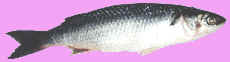
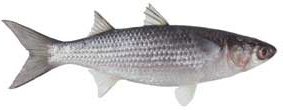
Mullet (Mugil cephalus) Photographs
and Information
|
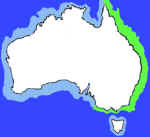
Mullet live in shallow coastal areas and enter bays and
rivers, in tropical and temperate waters world-wide. They can also inhabit freshwater
reaches of coastal rivers and can migrate hundreds of kilometres. Sea mullet are
found right around Australia, but are more common along the stretch of
east coast between central Queensland and southern New South Wales. They
are a schooling fish at all sizes, especially when migrating along the
coast, which they tend to do in autumn and early winter. The sand mullet
is an estuarine and inshore fish of the southern half of the continent,
ranging form southern Queensland to southern Western Australia, while
the closely related yellow-eye mullet's range is confined to more
southerly waters.
Mullet are a large, plump silvery fish of excellent flavour. They are very oily, and
have a high fat content, and have a very rich distinct, strong fishy flavour. They are
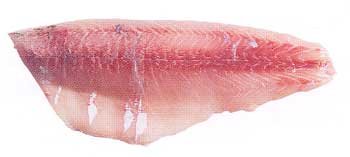
usually sold whole or as fillets. The raw flesh is pinkish grey, dark after spawning
period. After cooked the flesh flakes easily is medium to firm and always tender.
Mullet tend to school as juveniles and during spawning season as adults. They spawn at
sea.
Mullet feed on detritus, diatoms, algae and microscopic invertebrates which they filter
from mud and sand through their mouth and gills. A proportion of the sand ingested helps
the grinding of the food in the muscular stomach.
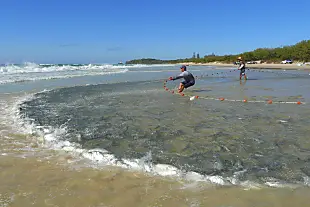
There are two types of commercial fishery for mullet. One is an ocean beach fishery
targeting spawning adults a their roe is highly prized . it is in high demand within
Australia and overseas. It can be sold fresh, or smoked or dried. Beach seine nets are
used for this type of fishery.
The second method of commercial fishery is the estuarine fishery. This accounts for the
majority of the mullet catch. Mullet are captured all year round but the majority of the
catch occurs in late summer and autumn. Coastal set gillnets and tunnel nets are the main
form of gear used for this fishery.
Minimum size limits apply to commercial catches of mullet in QLD, NSW, VIC, TAS and SA.
|
 |
 |
DID YOU KNOW?
In the early part of the twentieth century, the fishing industry
in Australia began to target additional species and use of new
fishing methods. Until mid-century, sea mullet was the
most common commercial fishery, followed by
barracouta.
|
| Scientific Name |
Mugil cephalus |
| Location |
QLD, NSW, VIC |
| Season |
All year round |
| Size |
To 78 cm, 1.4 kg |
| Australian Species Code |
37 381002 |
| Taste, Texture |
Rich strong fishy taste. Medium/firm & tender |
.
|
Nutritional Information
For every 100 grams raw product
for Mullet fillet. |
|
Kilojoules |
549 (131
calories) |
|
Cholesterol |
28 mg |
|
Sodium |
131 mg |
|
Total fat
(oil) |
0.4 g |
|
Saturated
fat |
32% of total
fat |
|
Monounsaturated fat |
15% of total
fat |
|
Polyunsaturated fat |
53% of total
fat |
|
Omega-3, EPA |
34 mg |
|
Omega-3, DHA |
87 mg |
|
Omega-6, AA |
26 mg |
|
Other
Mullet Links:
Fish Fillets Recipes
Recipes for Mullet from How To Cook Fish
Exporters of Sea Mullet
Importers of Sea Mullet
Processors of Sea Mullet
Wholesale Suppliers of Sea Mullet
Agents for Sea Mullet
See Also:
Mullet
Mullet, Grey
Mullet, Sea
Mullet, Striped Red
Mullet, Yellow Eye
Mullet, Red
Mullet Roe
|
|
|
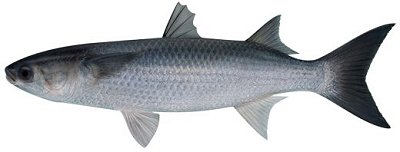 There are around 16
species of Mullet in Australian waters, most with silver
bodies covered in large clear scales. Available wild-caught,
they are free-swimming, mainly marine fish, that school near the
surface in estuaries and close to the coast over soft bottoms.
They are mainly caught using haul and beach seines, gillnets,
and tunnel, pound and ring nets. About 8 species are sold
commercially under the name Mullet, though Sea and Diamondscale
Mullets can also be marketed under their separate names. Sea
Mullet, distinguished by a transparent gelatinous eyelid, is the
largest Australian Mullet. It’s found around the entire coast,
moves out to sea from April-July to spawn, and is mainly caught
off beaches in Queensland, NSW and WA using set and surround
nets. Diamondscale Mullet, distinguished by its silver-olive
body and large dark-edged scales, is found around the northern
coast from Shark Bay (WA) to the Queensland-NSW border, and is
caught mainly off the Queensland coast using beach seines.
Yelloweye Mullet
occurs mainly around the southern coast from Kalbarri (WA) to Newcastle (NSW) including Tasmania with a
Marine Stewardship Council accredited fishery in Lakes and
Coorong (SA); Flat-tail Mullet, from Kalbarri (WA) around the
southern coast to Cooktown (Qld) including northern Tasmania;
and Bluetail Mullet, in northern waters from Noosa (Qld) to
Exmouth Gulf (WA). There are around 16
species of Mullet in Australian waters, most with silver
bodies covered in large clear scales. Available wild-caught,
they are free-swimming, mainly marine fish, that school near the
surface in estuaries and close to the coast over soft bottoms.
They are mainly caught using haul and beach seines, gillnets,
and tunnel, pound and ring nets. About 8 species are sold
commercially under the name Mullet, though Sea and Diamondscale
Mullets can also be marketed under their separate names. Sea
Mullet, distinguished by a transparent gelatinous eyelid, is the
largest Australian Mullet. It’s found around the entire coast,
moves out to sea from April-July to spawn, and is mainly caught
off beaches in Queensland, NSW and WA using set and surround
nets. Diamondscale Mullet, distinguished by its silver-olive
body and large dark-edged scales, is found around the northern
coast from Shark Bay (WA) to the Queensland-NSW border, and is
caught mainly off the Queensland coast using beach seines.
Yelloweye Mullet
occurs mainly around the southern coast from Kalbarri (WA) to Newcastle (NSW) including Tasmania with a
Marine Stewardship Council accredited fishery in Lakes and
Coorong (SA); Flat-tail Mullet, from Kalbarri (WA) around the
southern coast to Cooktown (Qld) including northern Tasmania;
and Bluetail Mullet, in northern waters from Noosa (Qld) to
Exmouth Gulf (WA).
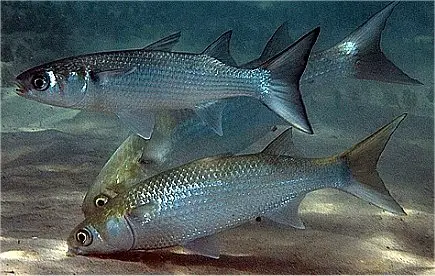
The sea mullet is a fat,
cylindrical fish characterised by a thick, transparent,
gelatinous covering over the eyes. Its colouration varies, but
is generally dark grey or green on the back with bright-silver
flanks and a silvery-white belly. The sand mullet is a much more
streamlined fish with a more pointed head and smaller eyes. A
small, dark blotch is evident at the base of its pectoral fins.
The yellow-eye mullet is characterised by its yellowish eyes and
smaller, more easily dislodged scales.
The sea or "bully" mullet
is the giant of the mullet clan, although it is possibly
rivalled in this regard by the tropical diamond-scaled mullet.
Bully mullet commonly weigh from 0.6 to 1.5 kg or more, although
those taken commercially in beach-netting operations often weigh
between 1.5 and 3 kg, with exceptional giants approaching 5 kg.
The sand and yellow-eye mullet are much smaller fish, rarely
exceeding 0.7 kg.
Angling & Fishing for Mullet:
Mullet are not a common catch for recreational fisherman, although in brackish to
freshwater mullet will accept baits of dough or earthworms, on small hooks under a float.
Small "poddy" mullet are a good live bait for such fish as flathead and can be
caught in a narrow bottle or similar container filled with bread.
Many mullet species are
difficult to catch, but both the sand and yellow-eye can be
taken on light tackle and small hooks baited with bread, dough,
peeled prawn, cockle or pipi, worm pieces or maggots.
|
|
Cooking
Mullet:
Sea mullet rate as
fair to good table fish, their oily, somewhat fatty flesh being
well suited to smoking, while sand mullet are arguably the
tastiest of the mullet clan. All mullet should be cleaned
promptly if intended for the table. Commonly 500g-1.5kg and
30-45cm, though Sea Mullet can grow to 8kg and Goldspot rarely
grows larger than 30cm and 1kg. Mullet are a low priced
fish.
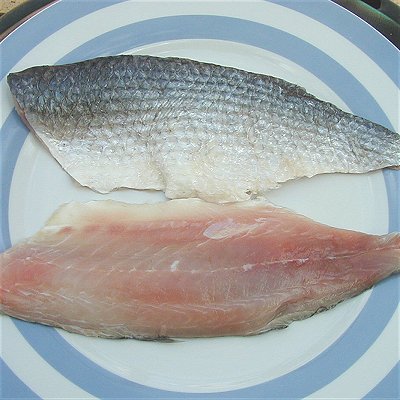
Usually sold as skinned fillets. In whole fish look for lustrous
skin, firm flesh, and a pleasant, fresh sea smell. In fillets,
look for pinkish-grey, firm, lustrous, moist flesh without any
brown markings or oozing water and with a pleasant fresh sea
smell.
|
|
Commercial Fishing for Mullet:
Sea mullet (Mugil cephalus) is an
important species for commercial fishers in southern Queensland.
The species is a major component of the ocean beach fishery, but
is caught in similar numbers in bays, estuaries and near-shore
coastal waters primarily south of Bundaberg. Mullet are caught using a variety of nets
and netting methods. The nets and methods used depend on the
fishery. Some of the nets used include mesh nets and seine nets.
The estuarine fishery uses gill and tunnel
nets to target fish for the local fresh fish market throughout
the year. The ocean beach fishery uses seine and haul nets to
target pre-spawning fish from April to August to supply an
international export market for
mullet roe.
Worldwide Trade Seafood Industry
Directory of companies and contacts who are Exporters,
Importers & Processors, Wholesale & Agents of Mullet.
|
|
More links about
Mullet & Mullet Information
Australian Government - Australian Bureau of Agricultural and Resource Economics
and Sciences - Australian Fisheries Statistics. Worldwide Trade Seafood Industry
Directory of companies and contacts who are Exporters, Importers & Processors,
Wholesale & Agents of Mullet
|
|
 |
 |
|
Mullet Fillet |
Commercial netting sea mullet off the
beach |
| |
|
|
 |
 |
|
Diving the Gold Coast - Photo by Ian Banks |
Two mullet fillets, showing meat and
skin sides. |
| |
|
|