|
|
|
|
|
Directory & Info for
Fishing,
Angling, Fishing Tackle, Fishing Guides, Fly Fishing, Bass Fishing,
Sports fishing, Game Fishing....
Info on All types of
Fishing | Angling | Fishing Tackle etc. |
| |
|
Glossary of Fish, Seafood
and Fishing Terms |
|
|
|
Australian Fish Bag Limits and Size Regulations |
|
Photos of Australian Seafood, Fish, Crustaceans &
Cephalopods and Information on each... |
|
Abalone, Blacklip |
|
Albacore
Tuna |
|
Baler Shell |
|
Barbounia, Tiny |
|
Barracouta |
|
Barramundi |
|
Bass, Sea |
|
Batfish |
|
Batfish, Silver |
|
Blackfish |
|
Boarfish |
|
Bonito Tuna |
|
Bonito, Watson's Leaping |
|
Bream |
|
Bream, Butter |
|
Bream, Slate |
|
Bug, Moreton Bay
(Slipper Lobster) |
|
Bug, Balmain |
|
Butterfish |
|
Calamari,
Southern |
|
Carp, European |
|
Catfish, Blue |
|
Catfish, Lesser Salmon |
|
Cockles |
|
Cod, Bar |
|
Cod, Blue eye |
|
Cod, Coral Rock |
|
Cod, Ghost |
|
Cod, Maori |
|
Cod, Murray
|
|
Cod, Southern Rock |
|
Cod, Spotted |
|
Cod, Tomato |
|
Cod, Wirrah |
|
Cod, Yellow Spotted |
|
Coral Trout |
|
Cowanyoung |
|
Crab, Blue Swimmer |
|
Crab, Champagne |
|
Crab, Giant
|
|
Crab, Mud |
|
Crab, Spanner |
|
Crawfish |
|
Cuttlefish |
|
Dart Fish |
|
Dolphin Fish |
|
Dory, John |
|
Dory, Mirror |
|
Dory, Silver
|
|
Drummer, Southern |
|
Eel, Longfin |
|
Emperor, Red |
|
Emperor, Red Throat |
|
Flathead |
|
Flounder, Small Toothed |
|
Flutemouth, Rough |
|
Frost Fish |
|
Garfish |
|
Gemfish |
|
Goatfish |
|
Grouper |
|
Gurnard, Red |
|
Gurnard, Spotted |
|
Hairtail |
|
Hump Headed
Maori Wrasse |
|
Hussar |
|
Jackass Fish |
|
Jacket, Ocean |
|
Jacket, Sea |
|
Jewfish |
|
Jobfish, Gold Banned |
|
Jobfish, Rosy |
|
Kingfish,
Yellowtail |
|
Latchet Fish |
|
Leatherjacket, Reef |
|
Ling |
|
Lobster Eastern
Rock |
|
Lobster Southern Rock |
|
Long Tom |
|
Luderick |
|
Mackeral, Jack |
|
Mackerel, Slimey |
|
Mado |
|
Mahi Mahi |
|
Mangrove Jack |
|
Marlin, Black |
|
Marlin, Blue |
|
Marlin, Striped |
|
Melon Shell |
|
Monkfish |
|
Mono |
|
Moon Fish |
|
Morwong |
|
Morwong, Red |
|
Mullet - Roe |
|
Mullet, Diamond Scale |
|
Mullet, Red |
|
Mullet, Sea |
|
Mullet, Yelloweye |
|
Mulloway |
|
Mussels Black |
|
Mussels Greenlip |
|
Nanygai |
|
Octopus |
|
Orange Roughy |
|
Oreo, Black |
|
Oyster,
Native |
|
Oyster,
Pacific |
|
Oyster, Sydney Rock |
|
Parrot Fish |
|
Parrot Fish (2) |
|
Perch, Ocean |
|
Perch, Saddle Tail Sea |
|
Perch, Silver |
|
Perch, Splendid |
|
Perch, Stripey Sea |
|
Pig Fish |
|
Pike |
|
Pineapple Fish |
|
Prawn, Banana |
|
Prawn, King |
|
Prawn, Red Spot |
|
Prawn, School |
|
Prawn, Tiger |
|
Queenfish, Needleskin |
|
Rainbow Runner |
|
Redclaw Crayfish |
|
Redfish |
|
Ribaldo |
|
Ribbon Fish |
|
Rudder Fish |
|
Salmon, Atlantic |
|
Salmon, Australian |
|
Scad |
|
Scallops, Queensland |
|
Scallops, Tasmanian |
|
Scorpion Fish, Raggy |
|
Shark |
|
Shark Black Tip |
|
Shark, Blue |
|
Shark Bronze Whaler (Dusky) |
|
Shark, Bull |
|
Sharks Fins |
|
Shark, Gummy |
|
Shark, Mako |
|
Shark, School |
|
Shark,
Tiger |
|
Shark,
Whiskery Reef |
|
Shark, White |
|
Shrimp, Mantis |
|
Sicklefish |
|
Silver Biddy |
|
Snapper |
|
Snapper, Big Eye |
|
Snapper, Fry Pan |
|
Snapper, Gold Band |
|
Snapper, King |
|
Snapper,
Red |
|
Snapper, Red Tropical |
|
Sole |
|
Sole, Tongue |
|
Squid, Arrow |
|
Squirrel Fish |
|
Stargazer |
|
Stingray, Butterfly |
|
Stripey Sea
Perch |
|
Surgeonfish, Sixplate Sawtail |
|
Sweetlip, Slatey |
|
Sweetlip, Yellow |
|
Swordfish |
|
Tailor |
|
Tarwhine |
|
Tilefish,
Pink |
|
Trevally, Big Eye |
|
Trevally, Golden |
|
Trevally, Silver |
|
Triple Tail |
|
Trout |
|
Trumpeter, Striped |
|
Tuna,
Albacore |
|
Tuna, Bigeye |
|
Tuna, Bluefin |
|
Tuna, Longtail |
|
Tuna, Skipjack |
|
Tuna, Striped |
|
Tuna, Mackerel |
|
Tuna, Yellowfin |
|
Venus Tusk Fish |
|
Whiting, Sand |
|
Whiting, School |
|
Wrasse |
|
Yabby,
Freshwater Crayfish |
|
Yellowtail |
|
FULL LIST of Fish &
Seafood |
|
Beche De Mer
(Sea Cucumber - Trepang) |
|
Amberfish |
|
Blackfish |
|
Black Teatfish |
|
Brown Sandfish |
|
Curryfish |
|
Elephants Trunks fish |
|
Greenfish |
|
Lollyfish |
|
Pinkfish |
|
Prickly Redfish |
|
Sandfish |
|
Stonefish |
|
Surf Redfish |
|
White Teatfish |
|
|
|
Commercial
Seafood Directory |
|
Sea-Ex Seafood, Fishing, Marine
Directory |
|
Aquaculture Directory |
|
Commercial Fishing |
|
Seafood Information by
Country |
|
Australian Fish Photos &
Info |
|
Interesting Fish Facts & Trivia |
|
Country Directories |
|
Thailand Business
Directory |
|
Seafood: |
|
Wholesale Seafood
Suppliers Australia |
|
Wholesale Seafood
Suppliers International |
|
Retail Seafood Sales |
|
Seafood Restaurants |
|
Seafood Recipes |
|
Seafood Information |
|
Seafood
Industry Resources |
|
Skipjack Tuna (Katsuwonus
pelamis) Photographs
and Information
|
Skipjack Tuna is also known as Striped Tuna or
Stripies. The skipjack or striped tuna is also known by many Australian
anglers as the "stripey". In Hawaii, the Polynesian name for this prolific
species is "aku". As with all the tunas, the name "tunny" is still sometimes
used, and skipjacks are often confused with
bonito (Sarda australis and S.
orientalis).
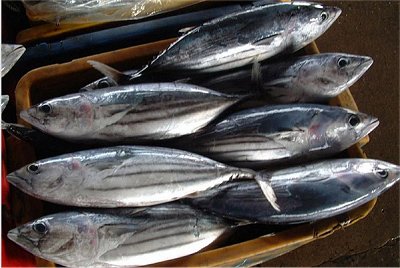
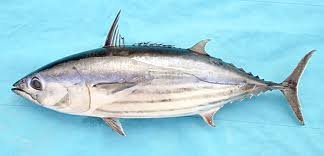
Skipjack Tuna are dark blue or purple on the back and silvery on their lower sides and
belly. They have three to five prominent, dark longitudinal bands on their lower
sides. These tuna have fine, slender teeth, a strong median keel on the caudal fin
base between two small keels, and barely separated first and second dorsal fins.,
They have a total of 53-63 gill rakers on the first gill arch.
The skipjack is small to
medium fish with a very thickset, barrel-like body that tapers
abruptly to a relatively small, upright tail. This fish is
characterised by its belly stripes, which contrast with the
upper back and flank stripes of the true bonitos. Skipjack
colouration is typically steel-blue to purple on the back,
silvery-blue on the flanks and silvery-white on the belly. The
belly area carries four to six longitudinal dark stripes.
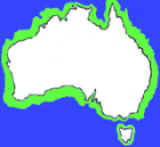
Skipjack tuna are widespread in Australia's oceanic waters. The global
distribution of skipjack tuna includes all tropical and subtropical waters except for the
eastern Mediterranean Sea and the Black Sea. They normally inhabit waters with
surface temperatures of 20°C to 30°C. However, adults are sometimes present waters
as cold as 15°C. Skipjack tuna also need a dissolved oxygen level of 2.5 ml per 1
of sea water to maintain a minimum swimming speed and require higher levels when active.
This requirement generally restricts skipjack tuna to water above the thermocline
and in some areas, such as the eastern Pacific, may exclude them from surface waters.
The depth range of skipjack tuna can be from surface waters to 260m during the day, but
at night it is much shallower. Skipjack tuna are a schooling fish having a general
tendency to school by size.
Skipjack tuna are thought to spawn in the Coral Sea off north Queensland and in waters
off north western Australia. In equatorial waters spawning occurs during all months,
but in sub-tropical waters the season is restricted to summer and early autumn.
In tropical waters reproductively active female skipjack tuna spawn almost daily.
Ripe skipjack tuna eggs are about 1mm in diameter and transparent and buoyant.
Estimates of the number of eggs released at each spawning range from about 100,000
eggs for the smallest mature females to 2 million for the largest fish. Skipjack
tuna eggs hatch after 1-1.5 days.
Most striped tuna or
skipjack caught by Australian anglers weigh from 1 to 6 kg, with
a few giants of close to 10 kg turning up occasionally. Record
catches in other parts of the world have topped 18 kg, but such
fish are uncommon.
The warm East Australian Current distributes
skipjack tuna larvae into subtropical
waters off eastern Australia.
 |
 |
 |
Skipjack Tuna (Katsuwonus pelamis)
French: Bonite A Ventre Raye
German: Echter Bonito
Italian: Tonnetto Striato
Spanish: Listado, Barrilete
Japanese: Katsuo
Hawaii names: Aku
Sri Lanka: Balaya
Did you know?
Tuna cannot pump water over their gills like other fish, instead they swim
with their mouths open which forces the water over their gills. If they stop
swimming they will suffocate.
Did you know?
Tuna have hearts that are much larger than other fish, they are about 10
times as large, relative to the size of the body.
|
| Scientific Name |
Katsuwonus pelamis |
| Location |
Australia wide |
| Season |
October to July |
| Size |
To 20 kg |
| Australian Species Code |
37 441003 |
| Taste, Texture |
Mild and meaty when cooked. Medium Texture |
|
Nutritional
Information
For every 100 grams raw product
for Yellowfin Tuna fillet. |
|
Kilojoules |
521 (124
calories) |
|
Cholesterol |
30 mg |
|
Sodium |
37 g |
|
Total fat
(oil) |
0.5 g |
|
Saturated
fat |
33% of total
fat |
|
Monounsaturated fat |
13% of total
fat |
|
Polyunsaturated fat |
54% of total
fat |
|
Omega-3, EPA |
14 mg |
|
Omega-3, DHA |
100 mg |
|
Omega-6, AA |
15 mg |
|
|
Angling for Skipjack Tuna | Tuna
Fishing
:
 Skipjack tuna are commonly caught by sport and recreational anglers. Most fish
are caught by trolling or casting small lures from a boat. Catches are also made
using flies or baits of whole, small fish or flesh strips. Skipjack tuna are a very
good bait for a variety of marine fish, with large skipjack tuna being used for the larger
species of tuna and billfish. Skipjack tuna are commonly caught by sport and recreational anglers. Most fish
are caught by trolling or casting small lures from a boat. Catches are also made
using flies or baits of whole, small fish or flesh strips. Skipjack tuna are a very
good bait for a variety of marine fish, with large skipjack tuna being used for the larger
species of tuna and billfish.
|
|
Cooking
Skipjack Tuna:
In the past, skipjack were
not often eaten in Australia because of their dark, blood-rich
meat and strong flavour. However, if bled promptly and kept on
ice they are quite palatable in casseroles, pies or when baked.
They are also well suited to canning, smoking, salting and
drying. Recipes for tuna from How to cook fish, Tuna Recipes
from Sea-Ex, nutritional information.
|
|
Commercial Fishing for Skipjack Tuna: Commercial fishing for Skipjack Tuna is generally carried out from December to March
by pole-and-line and purse seine vessels. Yellowfin and albacore tuna are
taken as a bycatch of both fishing methods. The Skipjack Tuna Fishery comprises
two sub-fisheries, the Western and Eastern Skipjack Tuna Fisheries. The fishery
as a whole extends throughout the Australian Fishing Zone. Take of
bigeye
tuna and yellowfin tuna as a by-catch is limited
to 2% of the total weight of a vessel’s seasonal skipjack tuna catch.
Sea-Ex Trade Seafood Industry
Directory:
Exporters of Skipjack Tuna |
Importers of Skipjack Tuna |
Processors of Skipjack Tuna |
Wholesale Suppliers of Skipjack Tuna |
Agents for Skipjack Tuna
|
|
More links about
Skipjack Tuna and Tuna Information
Sea-Ex Trade Seafood Industry Directory, West
Coast Tuna Fishing History - The Rise & Fall of the Tuna
Industry in San Diego USA, San Diego Tuna Boats, Tuna
Association of Ecuador, Commonwealth Fisheries Association
|
|