|
|
|
|
|
Directory & Info for
Fishing,
Angling, Fishing Tackle, Fishing Guides, Fly Fishing, Bass Fishing,
Sports fishing, Game Fishing....
Info on All types of
Fishing | Angling | Fishing Tackle etc. |
| |
|
Glossary of Fish, Seafood
and Fishing Terms |
|
|
|
Australian Fish Bag Limits and Size Regulations |
|
Photos of Australian Seafood, Fish, Crustaceans &
Cephalopods and Information on each... |
|
Abalone, Blacklip |
|
Albacore
Tuna |
|
Baler Shell |
|
Barbounia, Tiny |
|
Barracouta |
|
Barramundi |
|
Bass, Sea |
|
Batfish |
|
Batfish, Silver |
|
Blackfish |
|
Boarfish |
|
Bonito Tuna |
|
Bonito, Watson's Leaping |
|
Bream |
|
Bream, Butter |
|
Bream, Slate |
|
Bug, Moreton Bay
(Slipper Lobster) |
|
Bug, Balmain |
|
Butterfish |
|
Calamari,
Southern |
|
Carp, European |
|
Catfish, Blue |
|
Catfish, Lesser Salmon |
|
Cockles |
|
Cod, Bar |
|
Cod, Blue eye |
|
Cod, Coral Rock |
|
Cod, Ghost |
|
Cod, Maori |
|
Cod, Murray
|
|
Cod, Southern Rock |
|
Cod, Spotted |
|
Cod, Tomato |
|
Cod, Wirrah |
|
Cod, Yellow Spotted |
|
Coral Trout |
|
Cowanyoung |
|
Crab, Blue Swimmer |
|
Crab, Champagne |
|
Crab, Giant
|
|
Crab, Mud |
|
Crab, Spanner |
|
Crawfish |
|
Cuttlefish |
|
Dart Fish |
|
Dolphin Fish |
|
Dory, John |
|
Dory, Mirror |
|
Dory, Silver
|
|
Drummer, Southern |
|
Eel, Longfin |
|
Emperor, Red |
|
Emperor, Red Throat |
|
Flathead |
|
Flounder, Small Toothed |
|
Flutemouth, Rough |
|
Frost Fish |
|
Garfish |
|
Gemfish |
|
Goatfish |
|
Grouper |
|
Gurnard, Red |
|
Gurnard, Spotted |
|
Hairtail |
|
Hump Headed
Maori Wrasse |
|
Hussar |
|
Jackass Fish |
|
Jacket, Ocean |
|
Jacket, Sea |
|
Jewfish |
|
Jobfish, Gold Banned |
|
Jobfish, Rosy |
|
Kingfish,
Yellowtail |
|
Latchet Fish |
|
Leatherjacket, Reef |
|
Ling |
|
Lobster Eastern
Rock |
|
Lobster Southern Rock |
|
Long Tom |
|
Luderick |
|
Mackeral, Jack |
|
Mackerel, Slimey |
|
Mado |
|
Mahi Mahi |
|
Mangrove Jack |
|
Marlin, Black |
|
Marlin, Blue |
|
Marlin, Striped |
|
Melon Shell |
|
Monkfish |
|
Mono |
|
Moon Fish |
|
Morwong |
|
Morwong, Red |
|
Mullet - Roe |
|
Mullet, Diamond Scale |
|
Mullet, Red |
|
Mullet, Sea |
|
Mullet, Yelloweye |
|
Mulloway |
|
Mussels Black |
|
Mussels Greenlip |
|
Nanygai |
|
Octopus |
|
Orange Roughy |
|
Oreo, Black |
|
Oyster,
Native |
|
Oyster,
Pacific |
|
Oyster, Sydney Rock |
|
Parrot Fish |
|
Parrot Fish (2) |
|
Perch, Ocean |
|
Perch, Saddle Tail Sea |
|
Perch, Silver |
|
Perch, Splendid |
|
Perch, Stripey Sea |
|
Pig Fish |
|
Pike |
|
Pineapple Fish |
|
Prawn, Banana |
|
Prawn, King |
|
Prawn, Red Spot |
|
Prawn, School |
|
Prawn, Tiger |
|
Queenfish, Needleskin |
|
Rainbow Runner |
|
Redclaw Crayfish |
|
Redfish |
|
Ribaldo |
|
Ribbon Fish |
|
Rudder Fish |
|
Salmon, Atlantic |
|
Salmon, Australian |
|
Scad |
|
Scallops, Queensland |
|
Scallops, Tasmanian |
|
Scorpion Fish, Raggy |
|
Shark |
|
Shark Black Tip |
|
Shark, Blue |
|
Shark Bronze Whaler (Dusky) |
|
Shark, Bull |
|
Sharks Fins |
|
Shark, Gummy |
|
Shark, Mako |
|
Shark, School |
|
Shark,
Tiger |
|
Shark,
Whiskery Reef |
|
Shark, White |
|
Shrimp, Mantis |
|
Sicklefish |
|
Silver Biddy |
|
Snapper |
|
Snapper, Big Eye |
|
Snapper, Fry Pan |
|
Snapper, Gold Band |
|
Snapper, King |
|
Snapper,
Red |
|
Snapper, Red Tropical |
|
Sole |
|
Sole, Tongue |
|
Squid, Arrow |
|
Squirrel Fish |
|
Stargazer |
|
Stingray, Butterfly |
|
Stripey Sea
Perch |
|
Surgeonfish, Sixplate Sawtail |
|
Sweetlip, Slatey |
|
Sweetlip, Yellow |
|
Swordfish |
|
Tailor |
|
Tarwhine |
|
Tilefish,
Pink |
|
Trevally, Big Eye |
|
Trevally, Golden |
|
Trevally, Silver |
|
Triple Tail |
|
Trout |
|
Trumpeter, Striped |
|
Tuna,
Albacore |
|
Tuna, Bigeye |
|
Tuna, Bluefin |
|
Tuna, Longtail |
|
Tuna, Skipjack |
|
Tuna, Striped |
|
Tuna, Mackerel |
|
Tuna, Yellowfin |
|
Venus Tusk Fish |
|
Whiting, Sand |
|
Whiting, School |
|
Wrasse |
|
Yabby,
Freshwater Crayfish |
|
Yellowtail |
|
FULL LIST of Fish &
Seafood |
|
Beche De Mer
(Sea Cucumber - Trepang) |
|
Amberfish |
|
Blackfish |
|
Black Teatfish |
|
Brown Sandfish |
|
Curryfish |
|
Elephants Trunks fish |
|
Greenfish |
|
Lollyfish |
|
Pinkfish |
|
Prickly Redfish |
|
Sandfish |
|
Stonefish |
|
Surf Redfish |
|
White Teatfish |
|
|
|
Commercial
Seafood Directory |
|
Sea-Ex Seafood, Fishing, Marine
Directory |
|
Aquaculture Directory |
|
Commercial Fishing |
|
Seafood Information by
Country |
|
Australian Fish Photos &
Info |
|
Interesting Fish Facts & Trivia |
|
Country Directories |
|
Thailand Business
Directory |
|
Seafood: |
|
Wholesale Seafood
Suppliers Australia |
|
Wholesale Seafood
Suppliers International |
|
Retail Seafood Sales |
|
Seafood Restaurants |
|
Seafood Recipes |
|
Seafood Information |
|
Seafood
Industry Resources |
|
Yellowfin Tuna (Thunnus albacares) Photographs
and Information
|
Also known as Allison Tuna and
Ahi (Hawaii)
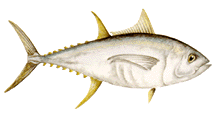
The caudal fin of the yellowfin tuna is distinctly notched in an "M" chape at
the centre of its fork. Behind the second dorsal fin and the anal fin, the body
profile of the yellowfin tuna is somewhat flat. The ventral surface of the liver is
smooth and the right lobe is longer than the central lobe.
Yellowfin tuna adults are distinguished by having a moderately long pectoral fin that
is one third to one quarter the body fork length. In juveniles there are about 20
broken pale lines crossing the lower sides. In large fish, the second dorsal and
anal fins may be exceedingly elongated and bright yellow. Yellowfin tuna less than
75cm fork length (10kg whole weight) may be difficult to distinguish from small
bigeye tuna.
A beautiful and colourful tuna. Blue to steel black above, silver to silvery gold
on the flanks, silvery white below. In fresh fish a band of bright gold or
iridescent blue (sometimes both) runs along the upper flank, separating the dark back from
the lighter belly area.
The stomach area sometimes carries oval, colourless patches and vague broken vertical
bars of white. These are more obvious in juveniles.
The yellowfins fins are bright yellow. The finlets, in particular are canary
yellow with black margins.
In Australian waters fish of between 2 and 80kg are common with some specimens reaching
100kg. In other countries Yellowfin have been recorded in excess of 150kg.
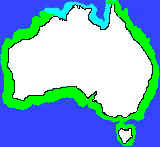
Yellowfin Tuna are found close inshore, in clean warm currents, but are more common on
the Continental Shelf areas. They prefer clean water with water temperatures of
17-27șC. They rarely venture into dirty, discoloured areas.
Yellowfin feed both on the surface, and well down in the water column.
Yellowfin is a very good eating fish (yellowfin
tuna recipes). It is extremely good as sashimi (raw fish).
Small yellowfin (2-12kg) will take trolled and cast lures, small live baits and
sometimes freely drifted pilchards or cut flesh strips. Larger yellowfin take small
and medium live baits, up to and including live frigate mackerel,
bonito and
striped tuna weighing as much as
5kg plus.
Yellowfin are extremely powerful and demand the best in
tackle and gaffs!
Yellowfin is often marketed as ahi, from
its Hawaiian name ʻahi although the name ʻahi in Hawaiian also refers to the
closely related bigeye tuna.
Although the species name Albacares might suggest otherwise, the fish
usually known as albacore is a
different species of tuna, Thunnus alalunga. The yellowfin tuna is
sometimes referred to as albacora by French and Portuguese fishermen.
Yellowfin tuna prey
include other fish, pelagic crustaceans, and squid. Like all
tunas their body shape is evolved for speed, enabling them to
pursue and capture fast-moving baitfish such as flying fish,
saury and mackerel. Schooling species such as myctophids or
lantern fish and similar pelagic drift fish, anchovies and
sardines are frequently taken. Large yellowfin prey on smaller
members of the tuna family such as frigate mackerel and skipjack
tuna.
In turn, yellowfin are preyed upon when young
by other pelagic hunters including larger tuna, seabirds and
predatory fishes such as wahoo, shark and billfish. As they
increase in size and speed, yellowfin become able to escape most
of their predators. Adults are threatened only by the largest
and fastest hunters such as toothed whales, particularly the
false killer whale, pelagic sharks such as the mako and great
white, and large blue marlin and black marlin. Industrial tuna
fisheries represent by far their most threatening predator.
|
|
 |
Yellowfin Tuna (Thunnus albacares)
French: Albacore
German: Gelbflossenthun
Italian: Tonno Albacora
Spanish: Rabil
Japanese: Kihada
Hawaii names: `Ahi
Did you know?
Tuna cannot pump water over their gills like other fish, instead they swim
with their mouths open which forces the water over their gills. If they stop
swimming they will suffocate.
Did you know?
Tuna have hearts that are much larger than other fish, they are about 10
times as large, relative to the size of the body.
|
| Scientific Name |
Thunnus albacares |
| Location |
QLD, NSW, VIC, TAS, SA, WA |
| Season |
All year round |
| Size |
Over 150 kg |
| Australian Species Code |
37 441002 |
| Taste, Texture |
Strong flavour. Medium to firm texture. |
.
|
Nutritional
Information
For every 100 grams raw product
for Yellowfin Tuna fillet. |
|
Kilojoules |
521 (124
calories) |
|
Cholesterol |
30 mg |
|
Sodium |
37 g |
|
Total fat
(oil) |
0.5 g |
|
Saturated
fat |
33% of total
fat |
|
Monounsaturated fat |
13% of total
fat |
|
Polyunsaturated fat |
54% of total
fat |
|
Omega-3, EPA |
14 mg |
|
Omega-3, DHA |
100 mg |
|
Omega-6, AA |
15 mg |
|
Other
Yellowfin Tuna Links:
TUNA
RECIPES
TUNA SUPPLIERS
|
Fishing Angling for Yellowfin Tuna
|
Tuna Fishing
:
Yellowfin tuna are fished in near-coastal and offshore regions
of New South Wales and can be caught by trolling lures or
fishing live or dead baits at anchor or on the drift. Pilchards,
small skipjack tuna and mackerel are common baits used by
anglers. These tuna can also be caught from drifting boats using
dead or live bait such as redfish or
nannygai along with berley.
Yellowfin tuna are some of the most popular game fish in
the world, and given their tremendous fight, size, and tastiness, it's easy to
see why. Once you tie into a big one, you may never go back to other game fish.
And whether you bring that big yellowfin home to eat or to hang on the wall,
you'll have a fish story to be proud of.
|
|
Cooking
Yellowfin Tuna:
To
Buy
Yellowfin tuna is usually sold as steaks, cutlets or sliced as sashimi. Look
for bright red flesh (colour can vary with cut) that is
firm, lustrous and moist without any dull brown markings or
oozing water and with a pleasant fresh sea smell. Always buy
sashimi-grade fish if it is to be served raw or rare.
Find out how to store,
cook yellowfin tuna, different cooking methods of yellowfin,
microwave cooking times for fish, nutritional information of
yellowfin tuna and delicious recipes using tuna.
|
|
Commercial Fishing for Yellowfin Tuna: The yellowfin tuna (Thunnus
albacares) is one of the most economically important fish in the
world. Hundreds of thousands of tons are taken by commercial
fishermen worldwide every year. If you open a can of tuna, if
it's not albacore, then it is probably yellowfin tuna. This
species, also called Allison tuna, has a wide range: it is found
in a thick band around the equator throughout the world,
inhabiting warm seas from the US-Canada border latitudes in the
north to Australia in the south, and frequents depths from the
surface down to 100 fathoms.
Modern commercial fisheries catch yellowfin tuna with
encircling nets (purse seines), and by industrial longlines.
More links about
Yellowfin Tuna and Tuna Information
West coast Tuna fishing history, Tuna Industry in San Diego, San Diego Tuna
Boats, The Tuna Association of Ecuador, Pending world record yellowfin tuna
story,
general information about yellowfin tuna, Sea-Ex Trade Directory of Exporters of
yellowfin tuna, importers of yellowfin tuna, processors and wholesalers.
|
|